

Specialized U-Line Appliance Repair in San Francisco
Mon–Sat: 8:00 AM – 7:00 PM
Fog on the inside of the glass, drops on the outside, or a damp shelf under the door: what each pattern tells you and which checks you can do yourself.
A glass-front beverage center is the one appliance in the house that everybody looks at. So when the glass turns cloudy or a bead of water runs down to the trim, it gets noticed fast. The useful question is not “is it broken?” but “where is the moisture appearing?” Inside versus outside, top versus bottom, steady versus after a party: each pattern points at a different cause.
This guide walks through those patterns for the U-Line beverage centers, from single-zone cabinets to the dual-zone ones, and ends with the point where a technician should take over.
Fog on the inner face is the most common version. Cold glass meets warm, humid air, and the vapor condenses on the nearest cold surface. The humid air got there one of two ways: every time the door opened, or through a gap while it was shut.
Think about the last day. A cabinet that was opened a dozen times during a dinner will fog and then clear within a few hours. That is normal behavior and needs no action. Fog that is still there the next morning, on a door nobody touched, is the pattern worth chasing.
Also look at what is sitting against the glass. A tall bottle or a case of cans that leans on the door keeps it a hair open along one edge, and that slot is enough to pull room air in all day. Straighten the load so nothing touches the door when it closes, and give it a day before drawing conclusions.
Water on the outside of the door or on the bezel around it is a different animal. Here the cold surface is the door frame, and the humid air is the kitchen itself. Cabinets in a room with a pot of pasta boiling, a dishwasher venting steam nearby, or a window left open on a muggy evening will sweat on the outside even when the unit is healthy.
If the moisture is limited to the frame and not the glass center, suspect the gasket. A seal that has lost its shape, collected sticky residue from a spilled mixer, or folded back on itself at a corner leaves a cold leak path. Run a clean, damp cloth along the gasket and look for a flat, shiny, or torn stretch. A dollar-bill-width strip of paper pinched by the closed door should resist a gentle tug all the way around, and a spot where it pulls free easily marks a seal that is not touching.
Coastal homes see a seasonal version of this. On foggy summer mornings in the Sunset or Pacifica, the air around an undercounter cabinet can be damp and cool long before the kitchen warms up, and the outside of cold glass collects a film that disappears by lunch. If it tracks the weather like that, it is the room, not the unit.
Setting the cabinet colder than needed makes every symptom above worse. The glass gets colder, the temperature gap to the room grows, and condensation arrives sooner. Many owners nudge a beverage center down after a warm spell and forget to bring it back. Raise it a step, wait a day with the door closed, and see if the moisture eases.
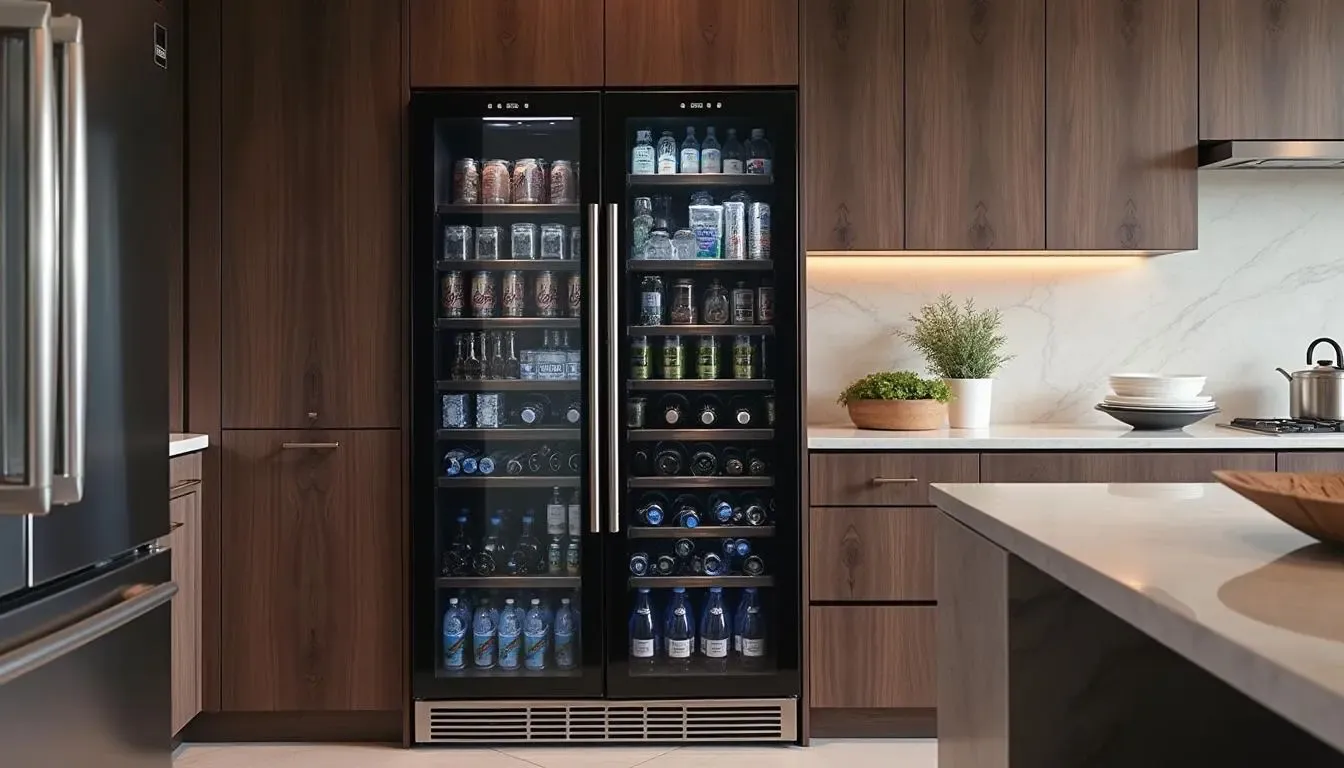
On a dual-zone cabinet such as the one covered on the U-Line URBD424 repair page, the two zones hold different temperatures behind the same pane. The colder side is the one that fogs. If only one half of the glass is wet, the zone setting matters more than any fault.
Condensation that rolls down the inside glass, lands on the floor of the cabinet, and sits there is worth a closer look. A small amount can evaporate; a puddle under the bottom shelf, or drips onto the cabinet front, suggests the water is not leaving by its normal path or the seal is letting in a steady supply.
Do not remove the grille, panels, or the glass to look for the source. The openings behind them involve electrical and refrigeration parts, and a wet interior near them is a reason to stop and call.
How you stock the cabinet changes how often the glass fogs. Warm bottles added in bulk bring heat and moisture with them; a case of room-temperature sparkling water pushed in right before guests arrive will cloud the pane for hours while the compressor catches up. Put new drinks in a few at a time when you can, and keep a couple of rows of already-cold ones near the front.
Packing is the other half. Shelves loaded edge to edge block the air that circulates inside, so one corner stays damp and cold while another stays warm. Leave a finger’s width between bottles and the glass and between bottles and the back wall. Cans lying on their sides, labels, and tall wine-style bottles are the usual offenders because they bridge across a shelf and lean on the door.
Lighting is a smaller factor, but worth a thought. A display lamp left on all day warms the glass slightly, while a cabinet kept dark and cold sits at the opposite extreme. Neither is a fault; just note it if you describe the fogging to a technician, along with the time of day it is worst.
Three signs move this out of the DIY column: the door will not seat evenly even with an empty cabinet, the moisture comes back every day despite a lighter load and a warmer set point, or the temperature has started drifting along with the water. At that point the exact model and its installation both matter, and the U-Line beverage center repair service starts with diagnosis, a written estimate, and no work without your approval.
When you reach out, mention where the moisture sits, whether the door opens often, and the set point. For more on how these cabinets are built, see the U-Line beverage centers overview.
Yes, briefly. Opening the door lets in warm, humid air, and a thin film on cold glass after heavy use usually clears within hours once the door stays shut.
The colder zone sits behind that half. A lower set point on one side makes that part of the pane colder, so it collects moisture first.
Use a soft cloth with mild soapy water, then dry it. Strong solvents and abrasive pads can dull or damage the seal surface.
No. Condensation is water from the air. A genuine cooling fault looks like warm drinks or constant running, not just wet glass.
Share a few details and we’ll confirm an appointment. Prefer to talk? Call us and we’ll help right away.