

Specialized U-Line Appliance Repair in San Francisco
Mon–Sat: 8:00 AM – 7:00 PM
A beautiful wood front can quietly change how a drawer closes. Here is how panel weight and alignment show up as warm contents and open-drawer warnings.
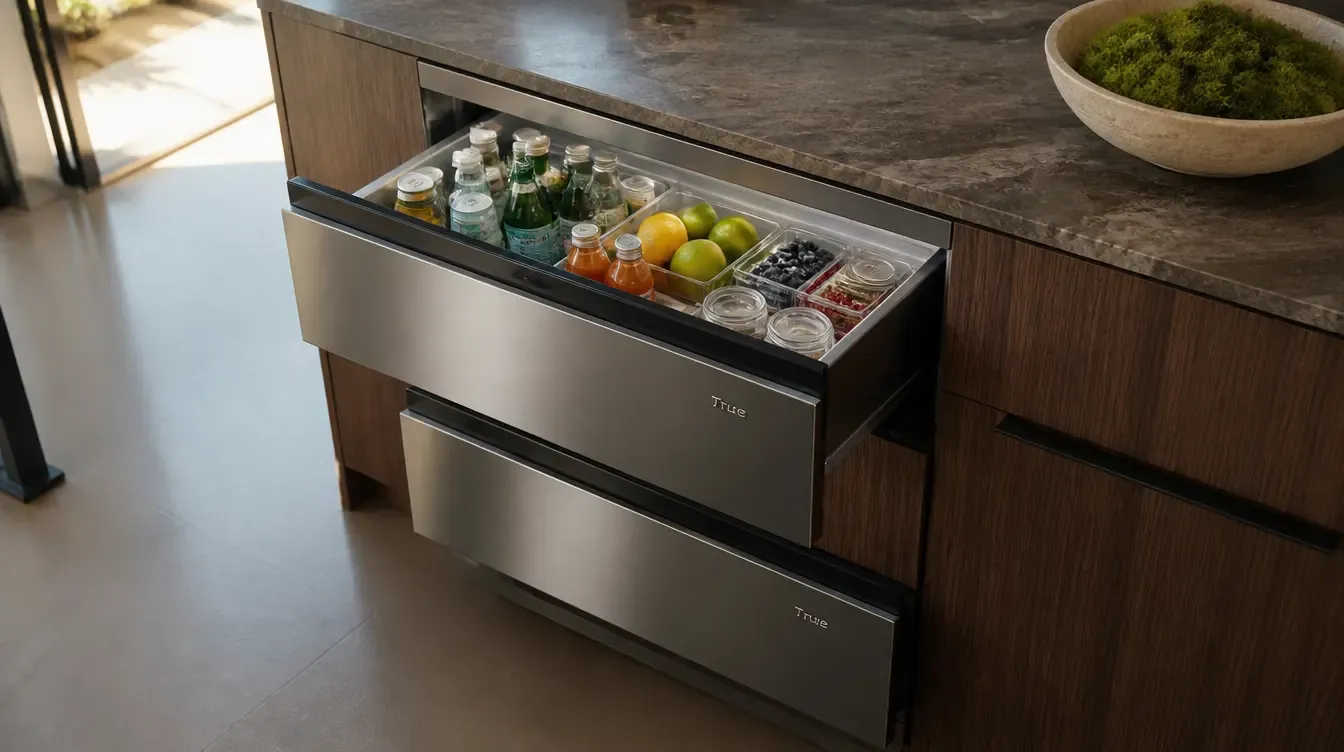
Kitchen designers love refrigerated drawers because they disappear behind matching cabinet fronts. The drawer looks flawless on install day. Six months later the owner notices the contents are cooler at the back than the front, or the unit keeps flagging an open drawer even though nobody left it out. The culprit is often the panel itself rather than the refrigeration.
A refrigerated drawer is a box that rides on slides and closes against a seal. When you screw a solid hardwood, stone-look, or thick laminate front to it, you add weight at the very edge that travels the farthest. Over time that weight can pull the drawer a fraction low or tilted forward when closed.
The effect is subtle. The face may sit flush with neighboring cabinets and still leave a hairline gap along the seal at the top corner. Warm kitchen air slides into that gap whenever the compressor is off, and the cabinet works harder to keep up.
That is why the U-Line refrigerated drawers overview stresses that door and drawer closing belongs on the list of things to confirm before anyone suspects a cooling fault.
You can learn a lot without tools. Stand in front of the closed drawer and look at the reveal, the narrow gap around the panel. If the gap is wider at the top on one side than the other, the drawer is not seated square. Press gently on the center of the panel; a drawer that moves inward a quarter inch or so was resting slightly ajar.
Next, open and close it slowly. A properly seated drawer glides and then settles with a soft stop. One that bounces, drags, or needs a second push is telling you the slides, the front, or a contents shift are fighting it.
Models with an open-drawer warning rely on the drawer reporting that it is shut. A drawer that rests a tiny bit proud of the seal can leave that signal intermittent, so the unit complains at odd hours, often at night when the room goes quiet and you hear the beep.
The controls matter here, and codes differ by platform. If your display shows a door or drawer message, record it exactly. The U-Line error codes index lists door-switch messages such as one for a switch that has stayed open longer than five minutes, which is the same family of symptom even though the wording may differ on your cabinet.
When a drawer leaks slowly, you rarely see a dramatic failure. The upper layer of food feels barely cool, the back corner stays cold, and the cabinet runs longer cycles. Drinks and produce suffer before you see any alert. Owners often assume the unit needs servicing because it is “old,” when the front has simply moved.
A drawer under a stone or wood countertop in an older remodel can also have lost level as the cabinet shifted, particularly in a Victorian flat where floors slope. If the surrounding cabinet boxes are visibly out of square, the drawer opening will be too.
Because alignment problems come and go, a technician cannot always reproduce them on arrival. A few notes from you fill that gap. Write down what time of day the alert appears, whether the drawer was just used, and what is stored near the front edge. Take a photo of the reveal around the panel with the drawer closed, and another with it pulled out a few inches.
Also note whether more than one drawer is installed. In a stacked pair, the upper and lower fronts must line up with each other and with the cabinet beside them, and an adjustment to one often shows up in the other. If both drawers complain, the common cause might be the cabinet opening rather than either drawer.
Finally, remember how the drawer was installed. If a cabinetmaker made the front and fitted it on site, say so. That tells the technician to expect extra hardware and to allow time for removing and refitting the panel without scratching the finish.
Not every closing problem starts with the front. A tall carton stood upright, a bag of citrus bulging over the rim, or a wine-style bottle laid across the divider can hold the drawer a few millimeters from home. Because the pull-out is deep, heavy items tend to migrate toward the back as it slides shut, then pile up against the rear wall and push the box forward at the next opening. Keep the heaviest things low and centered, and make sure the rim stays clear where it meets the seal.
Drawers behave differently from a tall cabinet. Cold air sits low and spills out when you pull the drawer open, so the contents warm quickly during use and recover slowly afterward. Judge the temperature after the drawer has been closed for a few hours, not right after you stocked it for a dinner party.
Spread items out so air can move around them, and keep soft produce away from the rear wall where it is coldest. If the front of the drawer still feels warmer than the back after a quiet day, the seal is the first suspect, and that is exactly what a visit would measure.
Resist the urge to loosen the panel screws or reposition the front. Mounting hardware for these fronts is part of the installation, the drawer slides sit behind it, and a shifted panel can end up rubbing or pinching a seal. Leave removal and realignment to someone who can inspect the unit with the front off.
If cleaning the gasket, emptying the drawer, and confirming it closes flush has not cured the warning, the U-Line refrigerated drawer repair visit begins with diagnosis before any part is ordered, comes with a written estimate, and proceeds only with your approval. Mention the panel material and when the drift began so the technician knows what to expect before the front comes off.
Yes. Extra weight at the front can leave a drawer slightly out of square, which lets warm air past the seal even though the face looks flush.
A drawer sitting a hair proud of its seal may report itself as open now and then. Record any displayed code and check how the drawer settles when closed.
No. Panel mounting is part of the installation and a shifted front can pinch the seal. Have it adjusted during a service visit.
Often. Items that press against the rim or lid can keep the drawer from seating, so removing them is a safe first check.
Share a few details and we’ll confirm an appointment. Prefer to talk? Call us and we’ll help right away.