

Specialized U-Line Appliance Repair in San Francisco
Mon–Sat: 8:00 AM – 7:00 PM
Cabinet makers and designers will ask what to do with the wine cabinet. This is how to think it through using facts you can collect in ten minutes.
The contractor’s question is usually blunt: keep the wine refrigerator, or pull it out so the cabinet run can be rebuilt? The answer is rarely just about whether the unit works today. It touches width, venting, panels, power location and whether the next ten minutes of demolition will turn a minor ailment into a bigger one. Here is a way to structure the decision before the crew arrives.
Open the door and find the data label inside the cabinet. It carries the model number and the production details. U-Line sells compact units in nominal widths of 15, 18, 24 and, in some series, 36 inches, and the model tells you which family it belongs to, such as a Seamless unit made for custom panels or a 3000 Series cabinet. For instance, a URWC424 is a 24-inch single-zone unit listed for indoor and outdoor use, and the 3036WCWC is a 36-inch dual-zone cabinet listed for indoor use.
Take a clear photo of that label. A designer needs the width, the finish and the installation category, and any later repair discussion will start from it.
A cabinet that cools, holds its setpoint and seals does not need to be replaced because of a remodel. Look for the signs that suggest trouble is coming: a compressor that runs for most of the day in ordinary weather, new frost on the interior, a door gasket that has flattened, or a display message that you ignored last month. If you have any of those, request a diagnosis before the demolition date, not after. A problem found in the open is much cheaper to deal with than one found after the cabinet has been reinstalled behind new stone.
The repair-or-replace choice follows the findings. A worn gasket, a fan or a sensor is a much smaller job than a failure in the sealed system, and the written estimate you receive lets you weigh it against a new unit with the facts in hand. Nothing is repaired without your approval.
Pulling a built-in unit out and setting it somewhere new is not just a matter of sliding it. Compact units hold lubricant in the compressor and should travel upright, with the door secured; tipping one on its side is how many trouble calls start. After a move, let it stand upright for a while before powering it, and check the manual for your model for the recommended wait. The same goes for a cabinet that has been stored in a garage while the kitchen is gutted.
Think about the outlet and the supply. A new location should keep the power cord and outlet reachable according to the installation instructions, and a GFCI-protected outlet is often required in a bar or outdoor kitchen. An electrician should confirm that, not the cabinet maker.
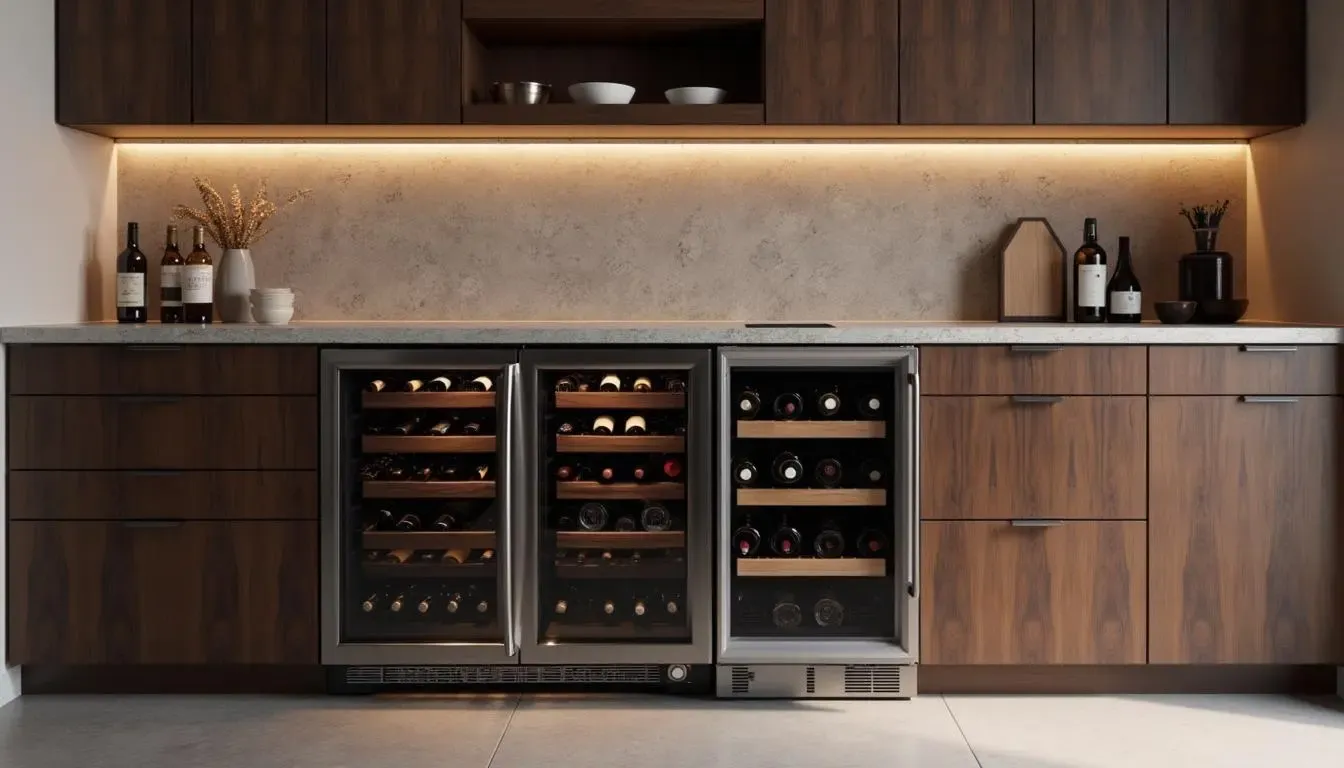
Most compact units breathe through the front. That is why they can be dropped between cabinets, but the toe-kick and the cabinet face need to leave the grille open. A designer who wants a seamless look may specify a decorative front panel; the unit made for panel installation, such as models in the Seamless line, is designed for that. A cabinet not made for a panel front can overheat behind one.
The oven and dishwasher next door matter too. Heat leaking through a side wall raises the work the cabinet must do. In an older Victorian flat with a narrow galley kitchen, where one cabinet line serves everything, the temptation to tuck the wine cabinet beside the range is strong. Resist it if you can, or at least ask for an insulated spacer.
Remodels run in a fixed sequence of demolition, rough utilities, cabinets, counters and finally appliances. The wine cabinet is easy to forget during all of it. Decide early whether it stays in its current spot during demolition, goes to a covered room or goes to a garage. A cabinet left in a garage in a hot week, or in a damp corner during a foggy winter, will reach the new kitchen in worse shape than the one you started with. If the unit is kept in storage, keep the door closed and bottles removed, and do not run it empty in an unventilated space.
When the cabinet comes back, ask the installer to leave the door slightly open until the first power-up so that the gasket does not take a set against the frame. Check the cord route and the outlet position before the countertop goes on. Once the stone is installed, nobody will want to reopen it for a power cord that does not reach.
A replacement has to fit the opening in width, depth and height, and it should match the hinge side and the finish you want. A single-zone cabinet cannot hold two temperatures, so consider how you drink: if you serve both whites and reds regularly, a dual-zone model such as the HWD524 might be what you want. If you are unsure whether a fault in your current unit is worth fixing, read our article on dual-zone cabinets holding the same temperature.
New units still benefit from a first-week check: confirm that the door closes squarely, the grille is open, and the temperature reads sensibly after a day.
Keep a folder, paper or digital, with the data-label photo, the date the cabinet last worked normally and any code or message you noticed. If a technician has examined the unit, add the written estimate. When the new kitchen is finished, those pages let you compare the cabinet before and after, which helps if a problem appears that the contractor insists was already there.
The U-Line wine refrigerator repair page explains how a visit works if you need a diagnosis during the planning stage.
Get a diagnosis first. A seal, fan or sensor repair may be small compared with a new unit, while a sealed-system failure may favor replacement.
Avoid it. Move it upright with the door secured and let it stand before restarting.
Only units designed for panel installation. Others can overheat if the front grille is covered.
On the data label inside the cabinet. Photograph it before demolition starts.
Share a few details and we’ll confirm an appointment. Prefer to talk? Call us and we’ll help right away.