Wine Refrigerators: Single-Zone, Dual-Zone and 36-Inch Cabinets
Four collections, three widths of single-zone cabinet, dual-zone pairs and one 36-inch model: how the U-Line wine refrigerator range is laid out…

Specialized U-Line Appliance Repair in San Francisco
Mon–Sat: 8:00 AM – 7:00 PM
For wine, a steady temperature matters more than a cold one. When a U-Line wine refrigerator wanders, fogs up or never lets its fan rest, here is how the cause is found and what you can safely look at first.
A food refrigerator that swings a few degrees is a nuisance. A wine refrigerator that swings is a risk, because bottles held for years respond to repeated warming and cooling. That is why complaints on these cabinets are usually about drift and not about outright failure: the display says 55 but a thermometer on the shelf disagrees, one side feels warmer than the other, or the fan seems to run without a pause.
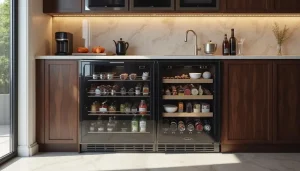
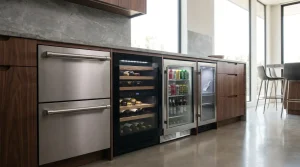
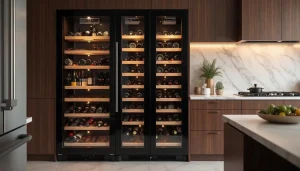
U-Line wine refrigerators come in single-zone and dual-zone versions. Single-zone cabinets are offered at 15, 18 and 24 inches in the Home, Seamless and 5 Class lines, the dual-zone models at 24 inches, and the 3000 Series dual-zone cabinet is 36 inches wide. Examples worth knowing by name are the URWC424 and the dual-zone URWD424.
This single question does more to narrow a diagnosis than any other. If only one zone is off, the cause sits in the parts that serve that zone: its sensor, its air path or its share of the cooling. If both zones are off together, a shared element, such as the compressor, the condenser airflow, the door seal or the main control, becomes more likely. Before you adjust anything, write down both set points, which compartment is affected and what a trusted thermometer reads in each.
The zone-specific controls report this in code form too. Left- and right-zone sensor alerts and the 6- and 12-hour deviation messages on dual-zone cabinets appear as messages such as L Temp Hi 6H+, R Temp Hi 6H+ and Zone T Open, and the U-Line error codes archive explains each one. Because wine cabinets share the refrigerator control family, their codes are filed with the refrigerator entries there.
Wine cabinets circulate air gently so that the temperature is even from the top shelf to the bottom. A fan that runs most of the time is not automatically a fault. It becomes one when it has changed: louder, ticking, or running while the cabinet is already at temperature and the compressor is off. Describe the sound and when it started. A rattle that began right after a restock often turns out to be a bottle neck touching the rear wall.
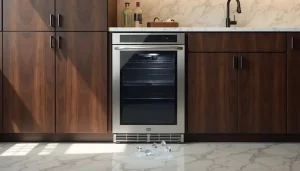
Cold glass in a humid room fogs. In a San Francisco wine closet, where fog season brings damp air indoors on days the windows stay open, a little mist on a door that is opened often is ordinary. Repeating wetness on the shelves or bottle labels, or beads inside the door frame, points to air leaking past the seal. Check the gasket for a flattened or dirty spot and make sure no bottle is holding the door off its seat. In the warm inland parts of the East and South Bay, a wine unit tucked into a closed cabinet in a hot den has the opposite problem, because it cannot reject its own heat.
Leave panels in place. Wine refrigerators are not the place for a first repair attempt.
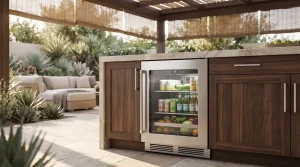
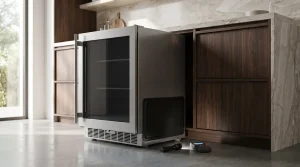
Many of these cabinets are designed to be flush with cabinetry, using a front grille for airflow. Some Home and Seamless models are listed for indoor and outdoor use, while others are indoor only. A built-in unit squeezed into a tight opening, or one placed against a warm wall, can show drift for reasons that have nothing to do with the sensor. Those details go into the report.
We confirm the model and note the zone and symptom history. Door sealing, loading and airflow are examined, then fan operation and temperature sensing. The control response is tested, and the refrigeration performance is assessed last. The written estimate lists what was found, and no repair begins until you accept it. Afterwards, we confirm the cabinet holds temperature rather than merely reaching it.
If the cabinet has stopped cooling and you are worried about the collection, move the most valuable bottles to a cool, dark place away from direct sun or a heat source, and let us know the cabinet is a priority when you book. Do not keep adjusting the set point to chase the display.
For other cooling cabinets, see U-Line refrigerator repair. A product overview is on U-Line wine refrigerators, and appointments start at contact.
Neither can be assumed. The display reflects the cabinet’s own sensor, while a thermometer shows what is happening on your shelf. A persistent gap between them is useful information for the technician.
Some circulation is normal. A change in sound, or a fan running while the cabinet is at temperature, is worth reporting.
A one-zone problem points to the sensor, air path or cooling share for that zone. Note which zone and its set point, and avoid changing the other one.
Persistent moisture on bottles can damage paper labels. It also signals air leakage, so it is worth checking the gasket and the door seat.
Settings are noted before work begins so they can be restored or confirmed afterward.
Four collections, three widths of single-zone cabinet, dual-zone pairs and one 36-inch model: how the U-Line wine refrigerator range is laid out…
Beverage centers get opened constantly and loaded with warm cans. Here is what goes wrong on single and dual-zone U-Line models and…
Frozen food gives you little time. See how U-Line freezers, refrigerator/freezer combinations and commercial blast chillers are diagnosed, and what to do…
No ice, thin cubes, standing water or an Er code: how U-Line crescent, clear and nugget machines fail at different stages and…
Outdoor U-Line units face sun, fog and cramped island cabinets. Learn what weather does to them, what is not a fault, and…
Drawers add alignment and gasket contact to the usual cooling checks. See what makes a drawer warm, frosty or stuck open, and…
A warm cabinet, a fan that never stops or frost on the back wall: how a U-Line undercounter refrigerator is diagnosed, and…
Share a few details and we’ll confirm an appointment. Prefer to talk? Call us and we’ll help right away.