

Specialized U-Line Appliance Repair in San Francisco
Mon–Sat: 8:00 AM – 7:00 PM
The grille at the bottom front is the cabinet's lungs. Learn how toe-kick work, filler strips and stored items quietly choke it.
When a built-in refrigerator only has access to the front of the cabinet, everything it needs for air has to come through that one opening. That is what front-venting means. It also means that small changes to the cabinet around it can change how the appliance runs.
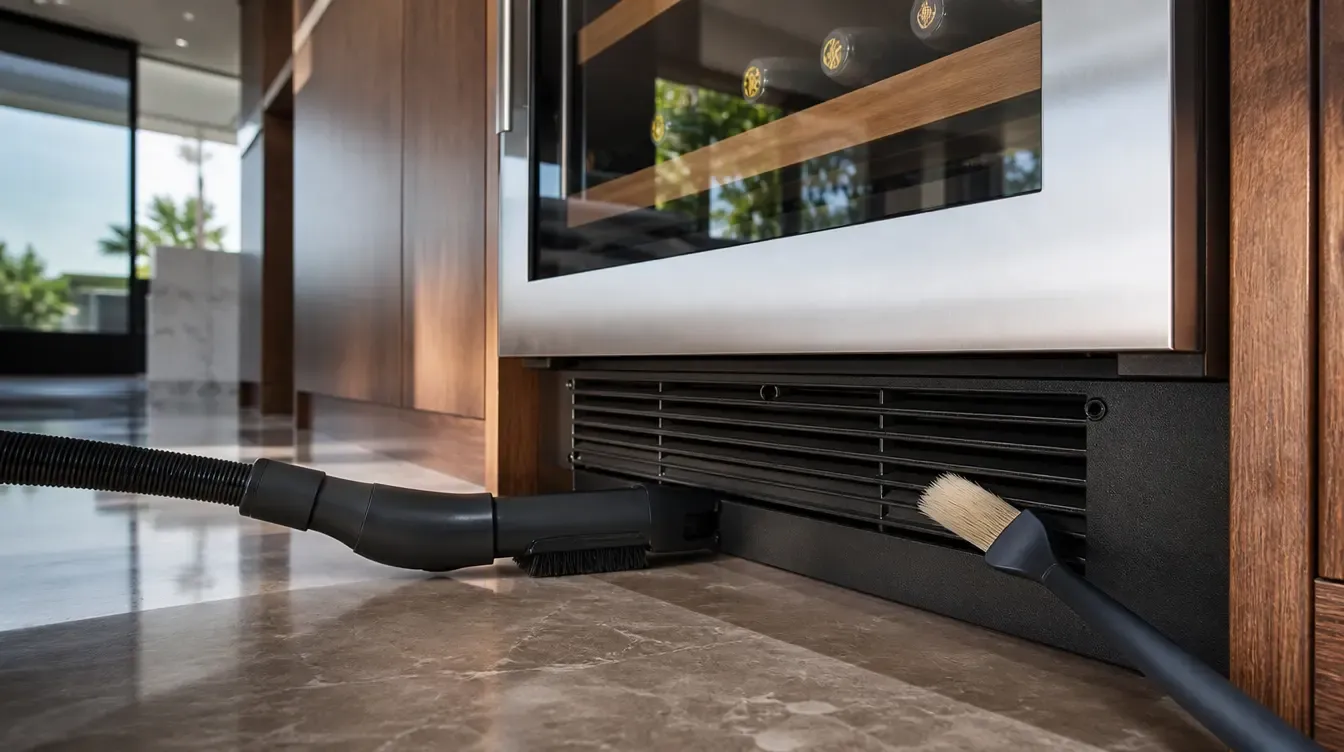
The grille across the bottom of the face draws room air in and sends warm air out. No rear or side space is required, which is why these models fit tight undercounter openings. The trade-off is that nothing may block or recirculate that stream.
The U-Line refrigerators page lists installation and ventilation among the factors technicians record before diagnosing. For a front-venting unit, that line is not boilerplate: it is often the whole problem.
Most restrictions come from the room, not the cabinet:
Any of these makes the cabinet breathe its own warm exhaust. Temperatures creep up, the compressor runs longer, and the refrigerator may feel warm on the sides. None of it looks like a failure until you see the dust.
Start with a flashlight and your eyes. Look at the grille at the bottom front. Does it show a clean path, or is it carpeted with gray fluff? Is the toe-kick a solid piece of wood that sits over the grille, or an open grill panel?
Then feel the air. With the unit running, hold your hand a few inches from the grille. You should sense some airflow, either a mild draw or a warm stream. If you feel no air movement at all, or the stream is hot and weak, report that.
Finally, slide a stiff piece of paper along the gap between the cabinet side and the refrigerator. If the paper will not slide, the unit is wedged tight and the bracket or adjacent cabinetry may be pressing on it.
Kitchen renovations are a common moment for trouble. A cabinetmaker builds a solid toe-kick from the same material as the rest of the base and covers the grille because it looks cleaner. A tile setter raises the floor by half an inch, shrinking the gap under the door. In a small Victorian kitchen, where the undercounter space was originally cut for something else, installers sometimes tuck the unit into a space with no relief at all.
If the cabinet was fine before the remodel and warm after, the timing is a clue. Tell the technician what changed and when.
A front-venting refrigerator is designed to sit flush in an opening, but flush should not mean squeezed. If the unit is wedged hard against cabinet sides, it can rattle against them, transmit hum into the cabinetry, and make the door swing off true. A door that sags or does not stay shut by itself lets warm air in long before any cooling part is worn.
Look at how the door closes. It should come to rest and seat against the gasket without help. If it hangs open at a crack from the cabinet opening, check whether the unit is level and whether an adjacent door or drawer is knocking it out of line. In older homes, the cabinet opening itself can sag because the floor under it has moved.
Do not try to pull a built-in unit out of its opening to check. It is heavy, connected to power and sometimes water, and slid-out installations strain cords and hoses. Leave that to a visit where the technician can handle it safely.
If you are planning a remodel, bring the ventilation requirement to the cabinetmaker in writing. The toe-kick under a front-venting unit needs an open path: a grille-style panel, a slotted insert, or no panel at all. A lovely matching strip that looks flush from the dining room will cost you cooling performance later.
The same goes for flooring. If new tile or thicker underlayment raises the floor, measure the height beneath the grille before the unit goes back. A raised floor can leave the grille too close to the surface, and a thicker mat or rug in front creates the same effect.
Home bars and kitchen islands often stack a refrigerator, a beverage center, an ice maker and a drawer unit within a few feet. Each pushes warm air out the front. Together they can warm the surrounding toe-kick area, and if the exhaust of one is drawn into the intake of the next, every unit runs hotter than it would alone.
Space allowing, leave a little breathing room between them and avoid covering the whole base in one solid skirt. If the room gets warm in summer, as inland kitchens in places like Walnut Creek or San Jose often do, a clear run along the floor matters even more.
A blocked intake rarely announces itself with a code. It shows up as a refrigerator that runs for long stretches, a warm breeze at floor level, a toe-kick that feels hot to the hand, and drinks that cool slowly after a dinner party. The pattern usually follows the room, getting worse on warm afternoons and easing overnight. If you notice that rhythm, photograph the base of the unit, write down when it is worst, and open the question of airflow before anyone orders parts. Parts are rarely the answer until the air path has been ruled out.
A soft brush or vacuum with a brush head, applied to the outside of the grille only, is a reasonable job. Do not remove the grille panel, push anything past it, or try to reach the condenser behind it. That is the territory covered by U-Line refrigerator repair, where the visit includes airflow review along with diagnosis, a written estimate, and no work without approval.
Mention the installation details when you call: the type of toe-kick, any recent flooring or cabinet changes, and how long the unit has been warm.
The unit pulls in and exhausts air through the grille at the bottom front, so it can be built into a cabinet with no ventilation at the sides or back.
No. Covering the grille blocks the airflow path and can make the cabinet run warm. Use an open or ventilated panel.
Whenever you can see lint or dust built up on the surface. Kitchens with pets or heavy cooking collect it faster.
It could be. New toe-kicks, flooring or filler panels often change the airflow path, so tell the technician what was altered.
Share a few details and we’ll confirm an appointment. Prefer to talk? Call us and we’ll help right away.