

Specialized U-Line Appliance Repair in San Francisco
Mon–Sat: 8:00 AM – 7:00 PM
Buzzing racks, a shivering cabinet and cloudy older reds usually trace back to a handful of causes. Learn which ones you can rule out from the outside.
Anyone who keeps older red bottles knows the fear: you pull a decade-old Cabernet from the cabinet, tip it into the decanter, and the last third is murky. Sediment settles on the low side of a bottle over time, and a wine refrigerator that vibrates all day can keep nudging it back into suspension. Before you blame the cabinet, though, it helps to sort out what kind of movement you are actually dealing with.
Put your palm flat on the top of the cabinet for a minute while the compressor is running. A faint, steady tremor that comes and goes with the cooling cycle is normal for any compact refrigerator. A rattle that changes pitch when you lean on the door, or a buzz that you can stop by pressing a rack, is something else entirely: that is a loose contact between two parts, not a machine fault.
The third kind is a knock or a rhythmic tapping that you can hear from across the room. That one deserves attention, because moving parts inside the sealed system and fan housing should not announce themselves that way. Writing down which of the three you have is the most useful thing you can do before anyone looks at the cabinet.
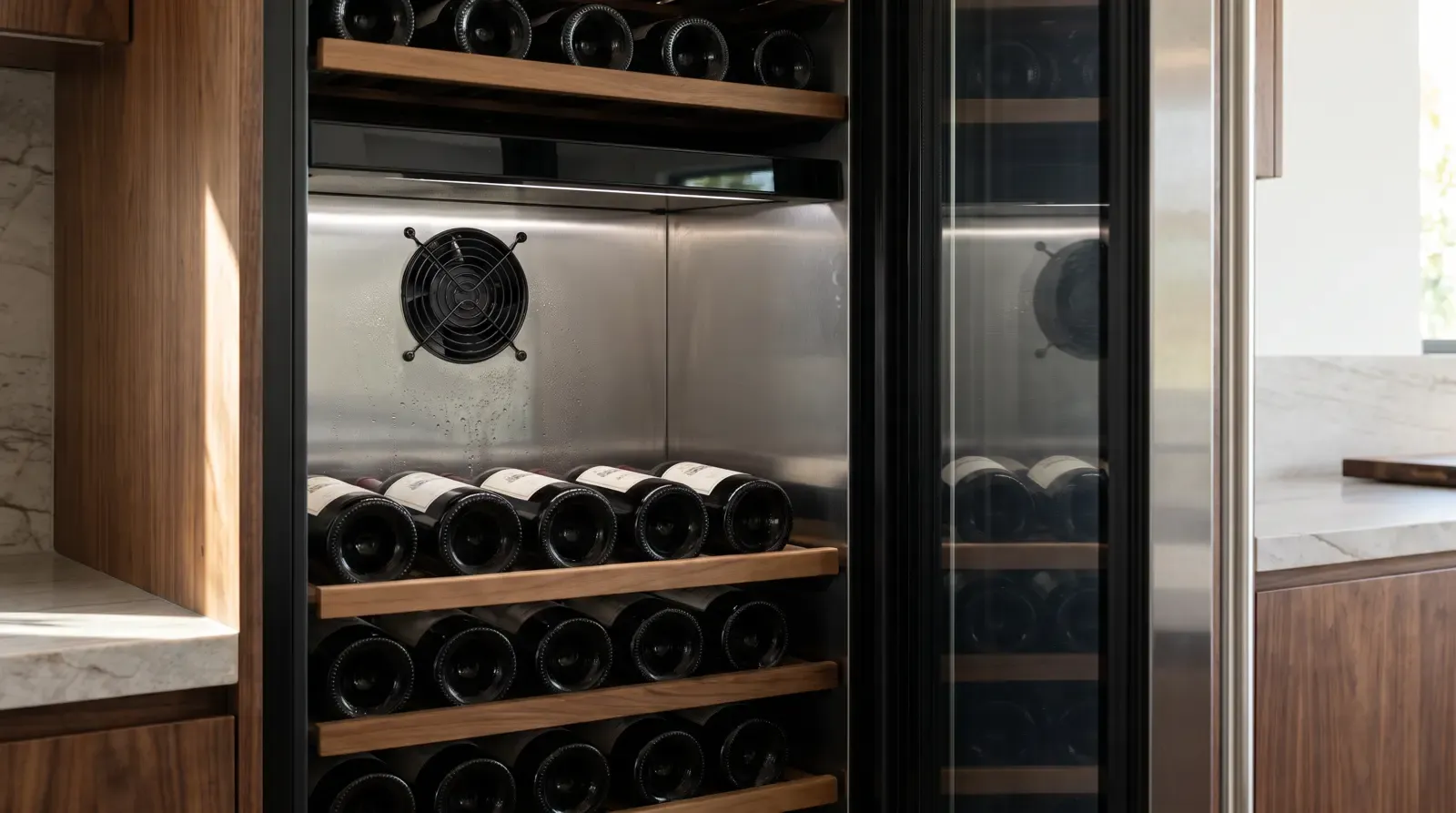
Glass against wood or metal makes a surprisingly loud sound once a compressor starts shaking it at a low frequency. The usual suspects are a bottle neck resting on the rack above it, two bottles touching at the shoulder, and a shelf that has been pushed back so far that it presses on the rear wall. Pull one suspect bottle at a time, shift the load, and listen again.
Stacked storage matters too. If you lay bottles flat on a shelf made for a different bottle diameter, they roll slightly with each cycle. Magnums and thick-necked sparkling bottles are famous for this. Giving an oversized bottle a spot of its own, away from the door side of the shelf, often ends the buzzing without any tools.
Decorative items on top of the cabinet get overlooked. A metal bar tray, a stack of coasters or a countertop ice bucket can resonate in sympathy with the cabinet. Lift everything off and run it for a cycle before drawing conclusions.
A built-in cabinet is only as quiet as its surroundings. In a remodeled kitchen the unit may be flanked by a stone or plywood cabinet run that was cut a hair too tight, so the side walls of the wine refrigerator touch the cabinetry and carry the hum into the wood. Look at the gaps on both sides with a flashlight. If you see the cabinet pressed against a panel with no air at all, mention it when you request U-Line wine refrigerator repair, because that clearance can be adjusted during a visit.
Floors count as well. Older Victorian flats in the city often have sloping floors, and a cabinet that rocks slightly on one corner will shake much more than one resting on all four feet. Press diagonally on the top corners; if it rocks, do not wedge cardboard under it. Note which corner and leave the leveling to a technician, since the front grille and the tilt of the door both depend on the cabinet sitting true.
Constant mechanical agitation is not good for aged wine, and that is a fair reason to take the cabinet’s motion seriously. Still, a small tremor is not the same as shaking a bottle by hand. Most of the sediment trouble people notice comes from moving the bottle rather than from the refrigerator. Standing a bottle upright for a day before opening, and pouring slowly against a light, does more for clarity than any change to the cabinet.
If you do see a fresh cloud in a bottle that has been sitting undisturbed for months, consider where it was kept. A bottle stored on a rack right next to the compressor side, or on the door shelf of a unit that is opened daily, takes more movement than one stored in the quiet middle row. Moving long-term bottles to the middle shelves and keeping the everyday bottles near the door is a simple habit.
Temperature swings can cloud a wine as well, apart from any motion. If the display reading drifts several degrees through the day, read our article on what to do after an outage or a trip away, then book a diagnosis if the drift continues.
A fan that has picked up dust or a worn bearing produces a whirring or ticking that rises in pitch. A compressor that is starting to labor makes a deeper growl and tends to run longer than usual. Neither is something an owner should investigate by removing the grille or panels. What you can do from the outside is keep the front vent clear, vacuum the grille opening lightly with a soft brush, and describe the noise accurately: pitch, how often it repeats, and whether it stops when the compressor stops.
Models in the Seamless line are built for installation behind custom panels, and some are listed for indoor and outdoor use, so airflow through the grille is part of the design. A blocked grille makes the compressor work harder and can add noise. If you have a 24-inch dual-zone such as the URWD424, mention both zones when you describe the noise, because the second evaporator and fan add another possible source.
A report that helps a technician covers four things: where the sound is loudest, whether it changes when you press a shelf or the door, whether it follows the cooling cycle, and how long it has been going on. Add the model number from the label inside the cabinet. With that, the visit can begin with a diagnosis rather than a guessing session, and any repair is quoted in writing and only carried out with your approval.
If the cabinet is quiet when empty but noisy when loaded, the fault is almost certainly in the loading. If it is just as noisy empty, set the bottles aside in a cool room and have it examined sooner rather than later.
A faint, steady tremor during the cooling cycle is normal. Rattling that changes when you touch a shelf or door usually means contact between bottles, racks or neighboring cabinetry.
Long-term agitation is not ideal for aged wine, but most visible sediment comes from moving the bottle before pouring. Standing it upright for a day beforehand helps.
Leave it to a technician. Leveling affects the door alignment and the grille position, and a built-in cabinet is hard to adjust safely.
Say where it is loudest, whether it follows the cooling cycle, whether it changes when you press a rack, and give the model number from the label.
Share a few details and we’ll confirm an appointment. Prefer to talk? Call us and we’ll help right away.